
Publish guides where people already work.
Turn reusable GuideAnts workflows into shareable and embeddable AI experiences with auth, limits, context, and usage visibility.

From reusable workflow to real app experience
Publishing is how useful AI work leaves the notebook and becomes something other people can use. A guide can start as an internal process, then become a friendly URL, an embedded web component, or an API-backed experience inside another application.
Share
Give a packaged workflow a friendly URL so customers, partners, or teammates can use it directly.
Embed
Drop a guide into a website, documentation site, portal, dashboard, or internal tool with the GuideAnts web component.
Integrate
Connect guides to application state, client context, files, and workflows so AI help belongs inside the product experience.
Govern
Apply authentication, usage limits, retention, analytics, and operational controls around each published experience.
Quick Start
Install the package and embed your published guide in minutes:
npm install guideants<script type="module">
import 'guideants/dist/guideants-chat.es.js';
</script>
<guideants-chat pub-id="your-published-guide-id"></guideants-chat>Use the API base URL for your GuideAnts environment when you need to point the component at a self-hosted deployment.
Customization
The <guideants-chat> component adapts to the experience you are building:
| Feature | Description |
|---|---|
| Display Modes | Full conversation history or last-turn-only for minimal widgets |
| Command Mode | Stateless mode where each message starts a fresh conversation |
| Starter Prompts | Suggested questions that help users begin with the right workflow |
| File Attachments | Let users upload images and documents |
| Voice Input | Speech-to-text with automatic silence detection |
| Camera Capture | Capture still images directly from device camera |
| Collapsible Widget | Floating chat that expands and collapses |
| Custom Theming | CSS custom properties that match your brand |
Client-side tool calling
Published guides can execute approved tools in the browser, enabling interactive features like DOM manipulation, local storage access, and deep integration with your application.
const chat = document.querySelector('guideants-chat');

chat.registerTool('SetTheme', async (call) => {
  const args = JSON.parse(call.function.arguments || '{}');
  document.body.setAttribute('data-theme', args.theme);

  return {
    toolCallId: call.id,
    name: 'SetTheme',
    content: JSON.stringify({ status: 'ok', appliedTheme: args.theme })
  };
});
Your guide can now change the page theme, read user preferences, or interact with approved parts of your application.
See it in action
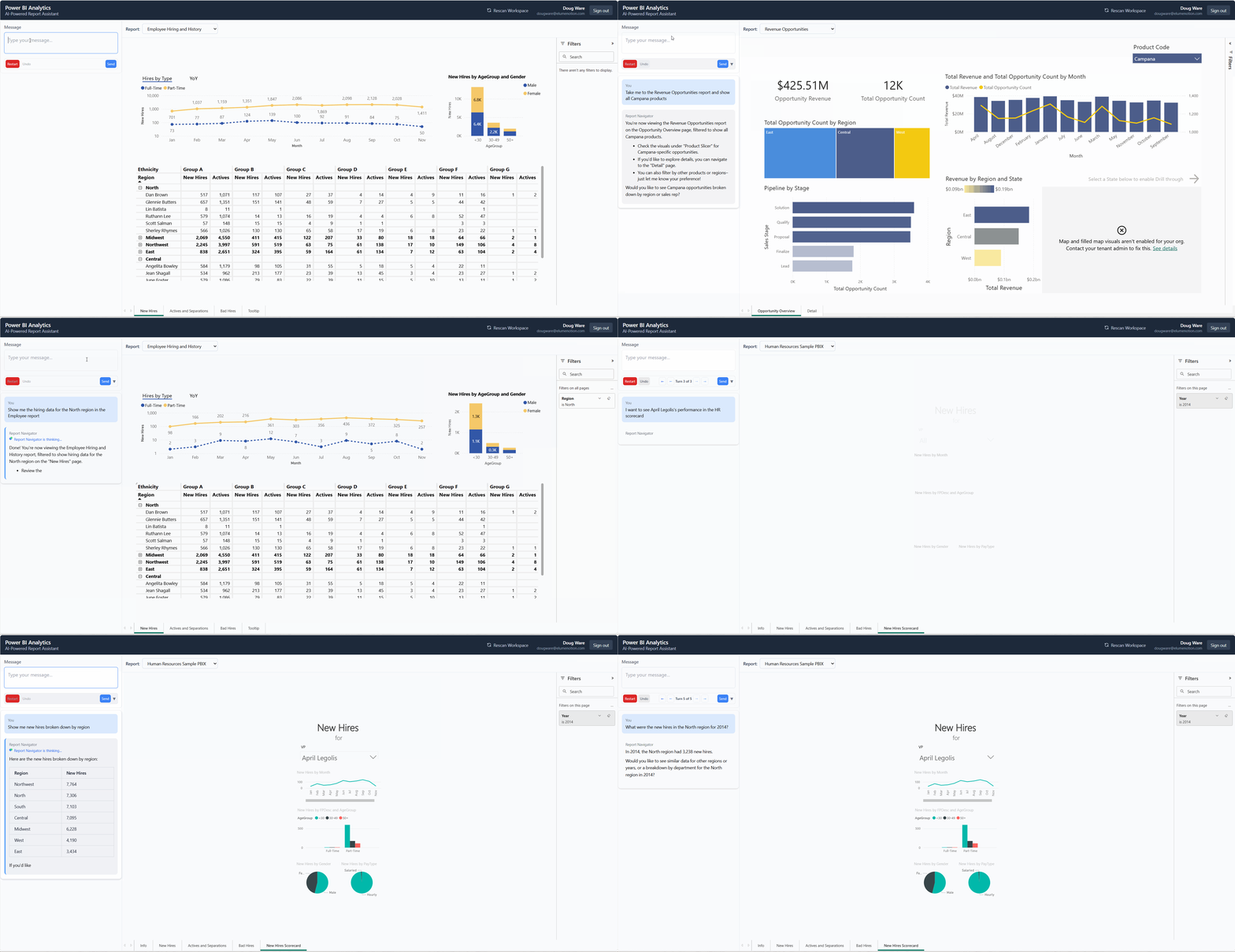
In this demo, a published guide is embedded in a Power BI reporting application. Users can ask questions in natural language while the guide uses client-side tool calling to navigate views, apply filters, and retrieve data.
Context providers
Inject dynamic context into conversations based on application state:
chat.setContextProvider(() => {
  return `Current page: ${window.location.pathname}
User plan: ${getCurrentUserPlan()}
Cart items: ${getCartItemCount()}`;
});
Context is captured when a conversation starts, enabling your guide to provide personalized, context-aware responses.
Security and authentication
Choose the authentication method that fits the published experience:
API key authentication
Simple and effective for server-to-server integrations:
- Generate keys in the GuideAnts dashboard
- Pass via
x-guideants-apikeyheader - Regenerate or revoke keys anytime
Webhook authentication
Integrate with your existing auth system:
- Validate tokens against your own backend
- Return user identity for personalized experiences
- Keep full control over access decisions
Server-side proxy
Keep API keys secure on your server:
import express from 'express';
import { createExpressProxy } from 'guideants/proxy/express';

const app = express();

app.use('/api/chat', myAuthMiddleware);
app.use('/api/chat', createExpressProxy({
  apiKey: process.env.GUIDEANTS_API_KEY,
}));
Usage controls
Protect each published experience with configurable limits:
- Message length limits - Cap the characters per user message
- Conversation turn limits - End conversations after a set number of exchanges
- Retention periods - Automatically archive old conversations
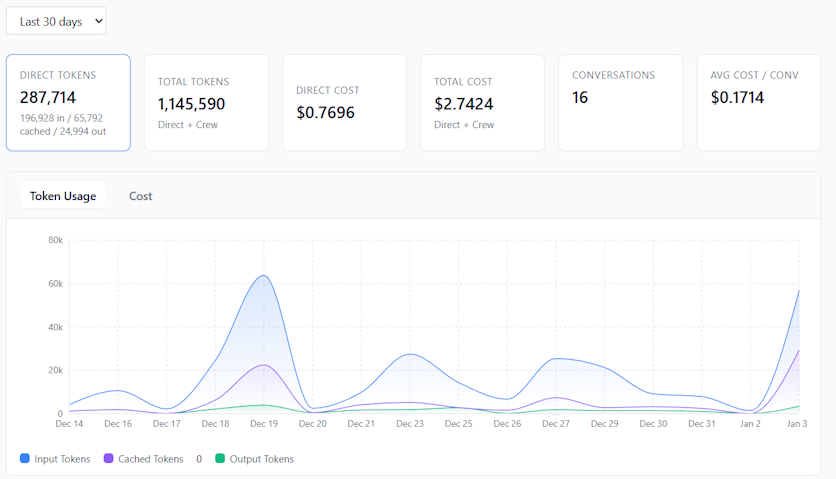
- Real-time analytics - Track tokens, costs, latency, and usage patterns per published guide
Common publishing patterns
Customer Support
Deploy grounded help that knows your products, policies, and procedures.
Interactive Documentation
Let users ask questions about docs and receive guided answers inside the documentation surface.
Product Onboarding
Guide new users through setup and configuration with an assistant that understands your product.
Internal Tools
Embed specialized assistants into admin dashboards, CRMs, reporting apps, or operational workflows.
Component capabilities
- Streaming responses - Real-time token streaming via Server-Sent Events
- Markdown rendering - Rich Markdown with syntax highlighting
- Mermaid diagrams - Automatic diagram rendering
- Media support - Images, videos, and audio playback
- Undo and restart - Users can undo messages or restart conversations
- Turn navigation - Browse through conversation history
- Accessibility - Built with accessibility in mind
- Responsive design - Adapts to container size automatically
Ready to publish?
- Create and refine your guide in GuideAnts.
- Configure authentication, limits, retention, and visibility.
- Copy the published guide ID.
- Embed the
<guideants-chat>component or link to the friendly URL. - Watch usage, cost, latency, and behavior as people use it.